
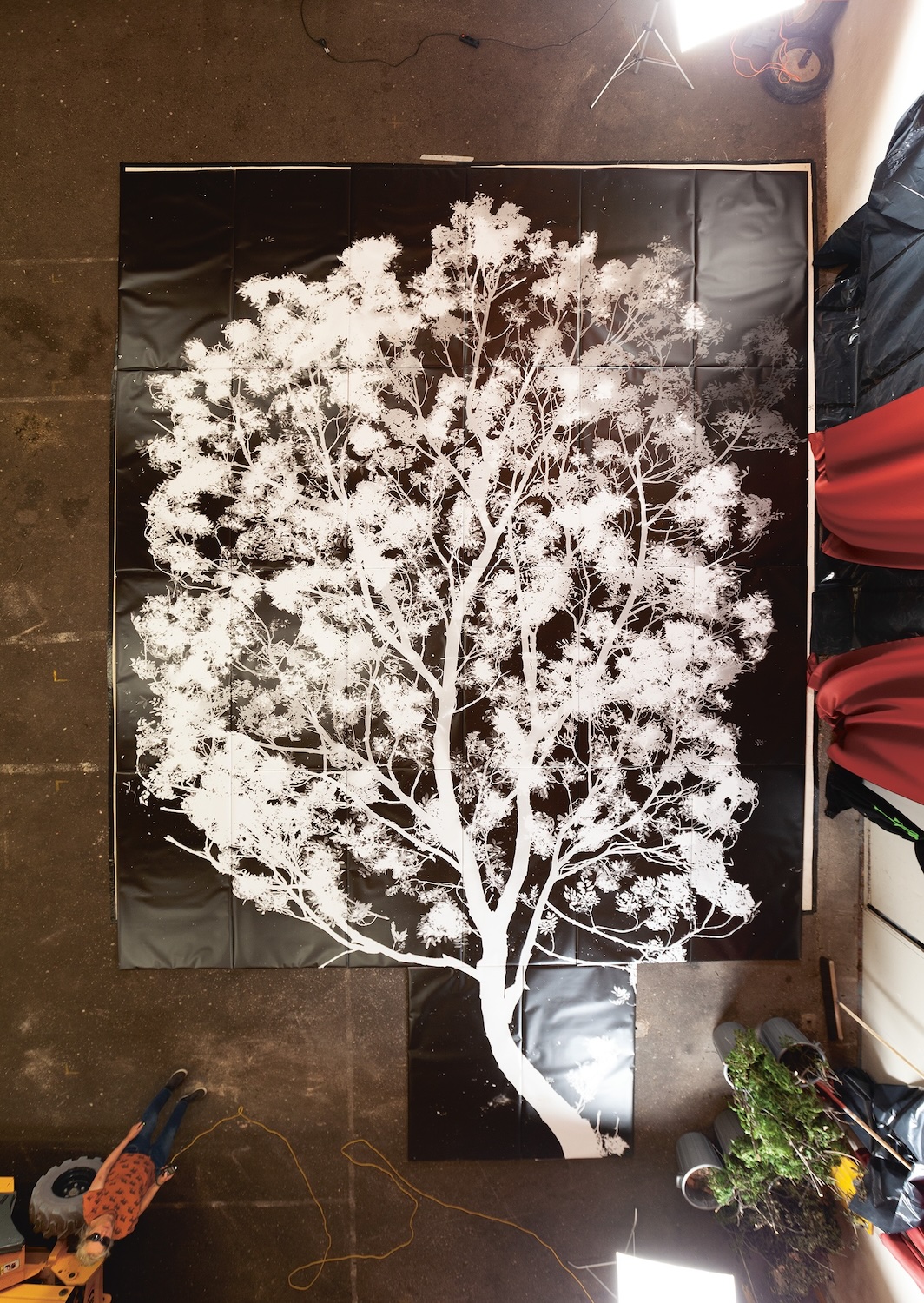
»Zwei Eschen«
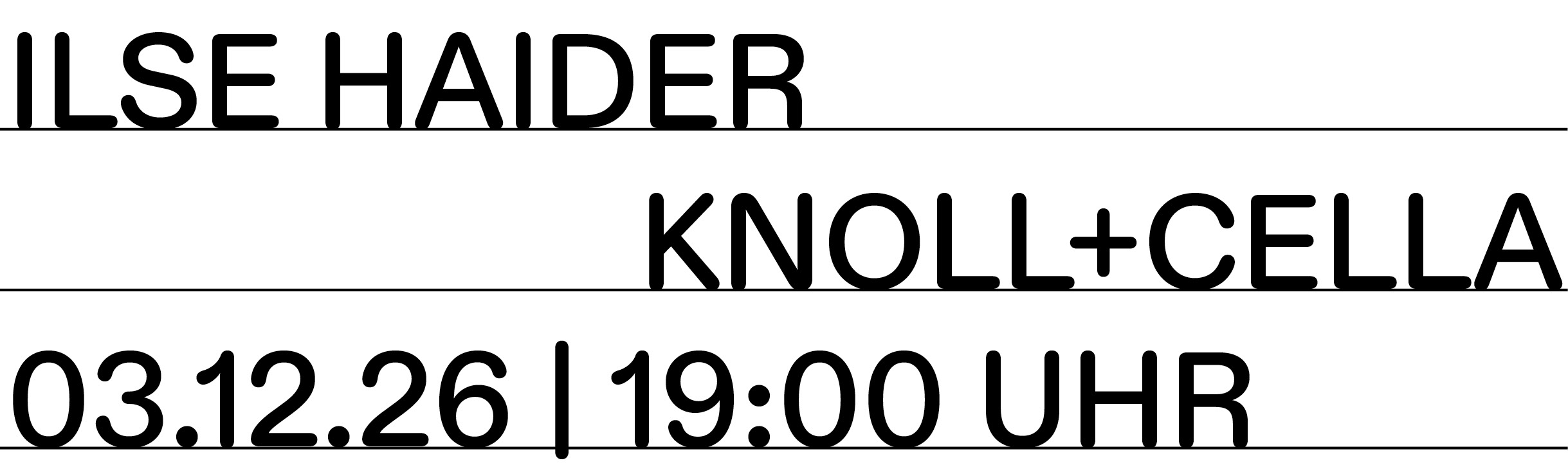
Knoll+Cella
»About Place«
>Opening: Thursday, 3 December 2026, 7:00 pm
>Duration: 4 December 2026−11 February 2027
FOTOHOF | Inge-Morath-Platz 2 | 5020 Salzburg | Austria

Two hundred years ago, Nicéphore Niépce created the world’s first photograph. The works in this exhibition reflect the technical conditions of the medium: in the case of Knoll+Cella, the technical-optical apparatus of the camera obscura, which projects spaces onto a surface in central perspective – Ilse Haider makes use of the chemical process of permanently fixing light and shadow for a gigantic photogram. Together, the two components constitute photography.
Knoll+Cella’s “About Place” deals with the relationship between interior and exterior space. Frequently changing places of residence such as hotel rooms or briefly used apartments are transformed into a camera obscura. This produces an upside-down projection of the exterior space onto the interior – and this superimposition of images was in turn photographed with a camera.
Ilse Haider’s photographic work, measuring 10 × 6 m, is one of two life-size photograms of two ash trees that were produced as the basis for a façade design within QUIVID, the City of Munich’s public art program. For this purpose, the felled trees were brought into a hall converted into a darkroom and, under red light, laid by numerous helpers onto light-sensitive paper, which was then exposed and developed on site. Like her well-known three-dimensional photo portraits of icons of pop culture and art history, this work, too, came about in an elaborate process in the darkroom – here, however, as a flat photogram of a scale that is unprecedented for Haider.


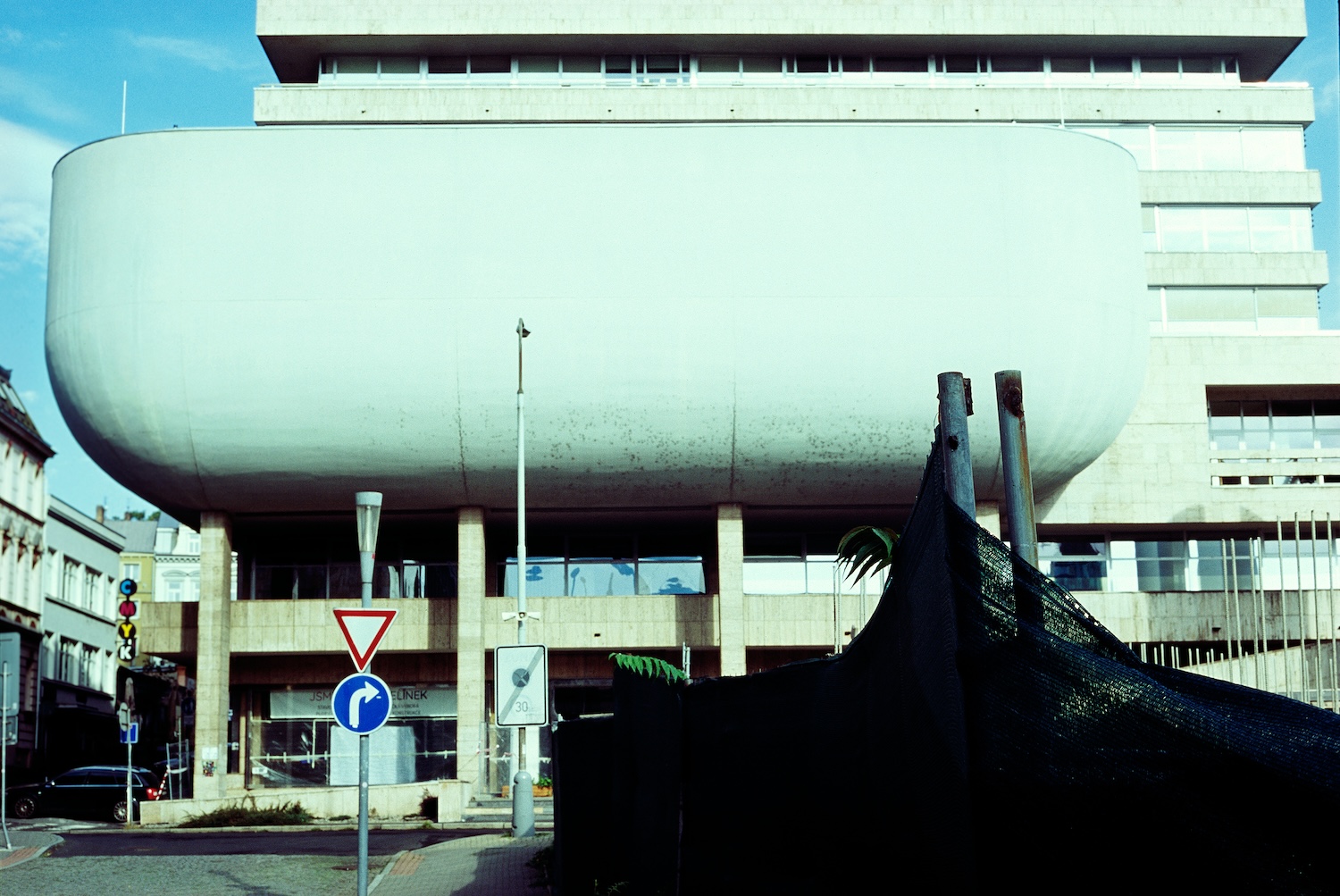
Diasec, 60 × 90 cm
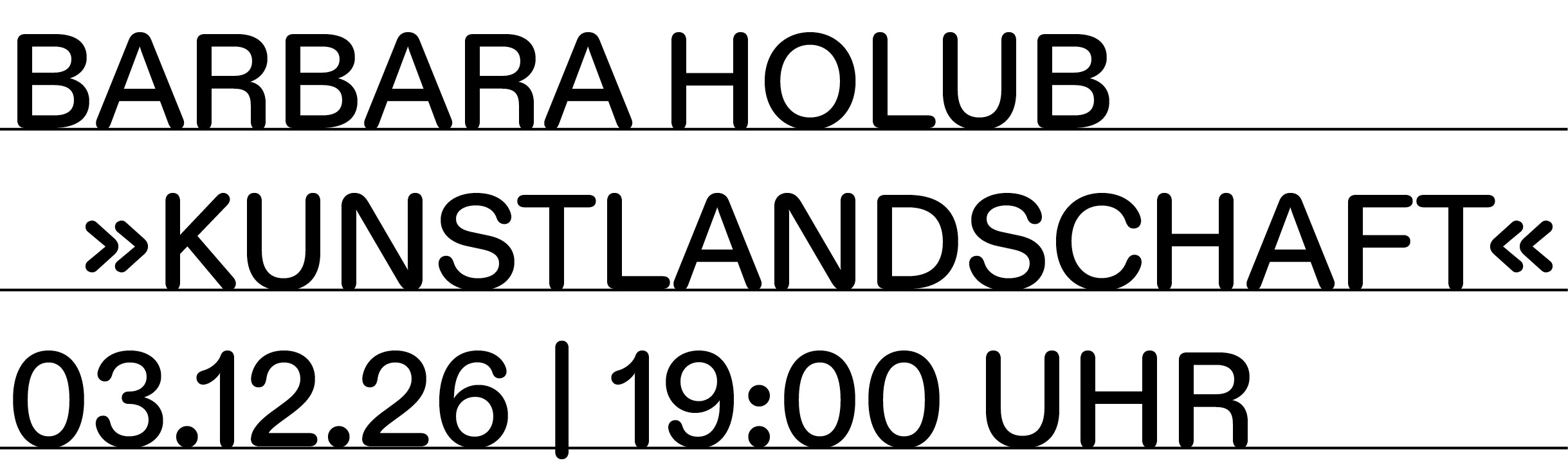
»Kunstlandschaft − Blind Spots, Black Holes«
>Opening: Thursday, 3 December 2026, 7:00 pm
>Duration: 4 December 2026−11 February 2027
FOTOHOF>STUDIO | Inge-Morath-Platz 2 | 5020 Salzburg | Austria
In “Art Landscape – Blind Spots, Black Holes”, Barbara Holub links aspects of her family history with questions about the political, economic and ideological interests behind urban transformation processes and visions of a “better society”.
The starting point is the personal story of Alois Holub, who was expropriated in 1945 and expelled from the Czech lands together with his family. Barbara Holub connects the contradictory role of her grandfather – a victim of the expulsions, but also a beneficiary of the Nazi regime – with a multilayered narrative about a place of great significance to her family history and to the city of Ústí nad Labem. The grandfather’s former printing-works building, which had to make way for the construction of the Communist Party headquarters in 1979, becomes the linchpin of a discussion of various historical dynamics that continue in many places to this day.
Layer by layer, personal memories are fused with the results of intensive research into a narrative at whose end no clear finding is to be expected. Places such as “Peace Square”, which remain a construction site to this day, become spaces for reflection in which the “blind spots” of a family history overlap with those “black holes” that are so numerous in the European history of the 20th century.

To download the press kit for this exhibition, please click >here
Press previews and appointments to speak with the artists and curators are available by arrangement. Please contact us by phone at +43 662 849296 or by email at fotohof@fotohof.at to schedule an appointment.
Press images may be used free of charge in connection with an exhibition review or announcement.

|
| |||||
| ||||||
Sponsors: Federal Ministry, State of Salzburg, Culture City of Salzburg
| ||||||



| >English version | >View in browser | >Unsubscribe |