
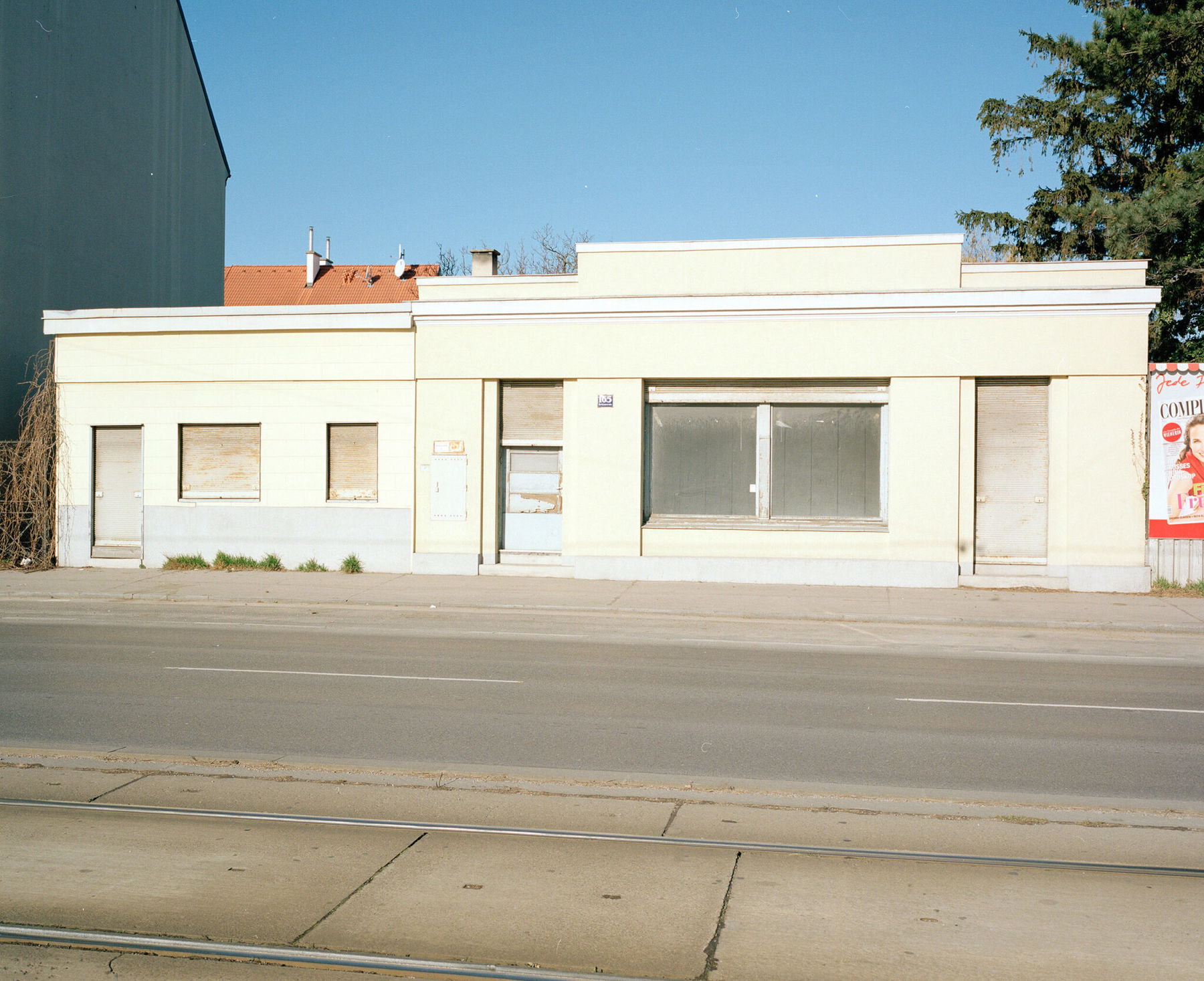
Leo Kandl, aus: »Brünner Straße«

Leo Kandl
»Brünner Straße«
>Opens: Thursday, 04.12.25, 7 pm
>Exhibition run: 05.12.25−31.01.26
>Curated by Rainer Iglar and Michael Mauracher
FOTOHOF | Inge-Morath-Platz 1-3 | 5020 Salzburg | Austria
»Brünner Straße«
>Opens: Thursday, 04.12.25, 7 pm
>Exhibition run: 05.12.25−31.01.26
>Curated by Rainer Iglar and Michael Mauracher
FOTOHOF | Inge-Morath-Platz 1-3 | 5020 Salzburg | Austria

For decades, Leo Kandl has repeatedly depicted his immediate surroundings, the formerly rural working-class district of Floridsdorf, in his extensive photographic work. Until the 1960s, Leo Kandl’s parents ran a shop selling paints, varnishes, drugstore goods, and household items at Brünner Straße 165.
In Kandl’s street photography, the 21st district becomes the backdrop against which the mostly unspectacular everyday life of the native and immigrant residents unfolds live. Kandl takes a restrained approach to photography, avoiding superficially ‘exciting’ perspectives and ‘decisive moments.‘ People linger in squares and streets or move through the urban space, with the photographer’s interest focused less on portraying individuals than on the sober depiction of situations and constellations in public space. His images open up a broad social panorama and subtly hint at possible areas of social tension, cultural differences, precariousness, and social exclusion, but essentially show the unspectacular normality of the suburbs.
In Kandl’s street photography, the 21st district becomes the backdrop against which the mostly unspectacular everyday life of the native and immigrant residents unfolds live. Kandl takes a restrained approach to photography, avoiding superficially ‘exciting’ perspectives and ‘decisive moments.‘ People linger in squares and streets or move through the urban space, with the photographer’s interest focused less on portraying individuals than on the sober depiction of situations and constellations in public space. His images open up a broad social panorama and subtly hint at possible areas of social tension, cultural differences, precariousness, and social exclusion, but essentially show the unspectacular normality of the suburbs.


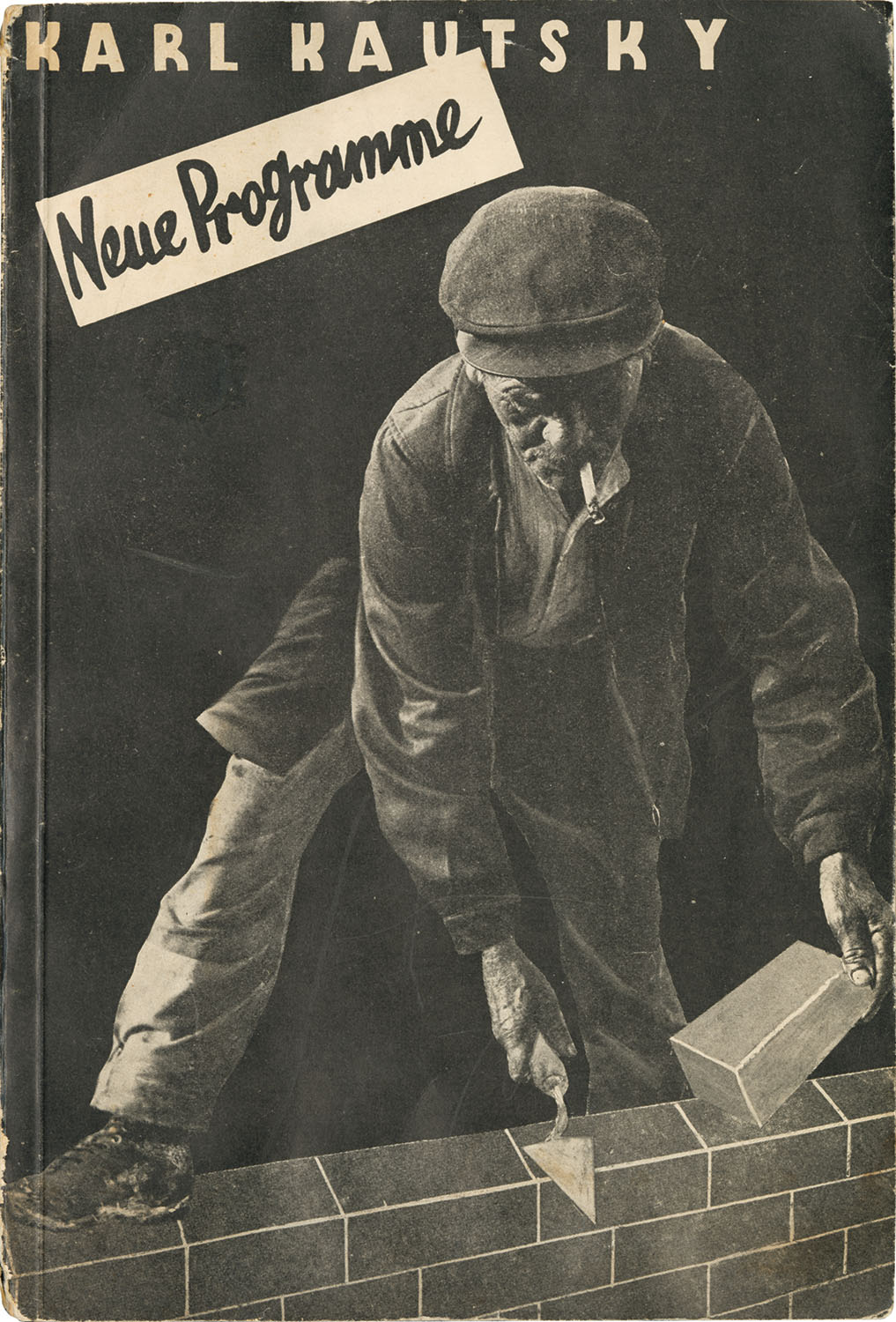
Broschureinband zu: Karl Kautsky, Neue Programme. Eine kritische Untersuchung, Wien, Leipzig: Prager, 1933
© Photoinstitut Bonartes, Wien
© Photoinstitut Bonartes, Wien

»Buchumschlag!
Fotomontagen im politischen Kampf der 1930er-Jahre in Österreich«
>Opens: Thursday, 04.12.25, 7 pm
>Exhibition run: 05.12.25−31.01.26
>Curated by Monika Faber and Arne Reimer
FOTOHOF>STUDIO | Inge-Morath-Platz 1-3 | 5020 Salzburg | Österreich
Fotomontagen im politischen Kampf der 1930er-Jahre in Österreich«
>Opens: Thursday, 04.12.25, 7 pm
>Exhibition run: 05.12.25−31.01.26
>Curated by Monika Faber and Arne Reimer
FOTOHOF>STUDIO | Inge-Morath-Platz 1-3 | 5020 Salzburg | Österreich
Influencing the public through photographic images has been possible since the introduction of large-scale, low-cost printing technology. However, it was only after universal suffrage was achieved following the First World War that rival parties in Austria developed strategies to fully harness this potential.
Escalating political conflicts eventually led to the burning of Vienna’s Palace of Justice in 1927—and, at the same time, to a flood of publications filled with propaganda, as was evident even on their covers. More than 150 examples of book covers, from across the political spectrum, show the intense struggle to win the public’s favor. This exhibition, the first of its kind in Austria, demonstrates the experimental approach to combining photographs and typography in books, brochures, and booklets during that period.
Exhibition in cooperation with Photoinstitut Bonartes

|
| |||||
| ||||||
Sponsor:innen: Bundesministerium, Land Salzburg, Kultur Stadt Salzburg
| ||||||



| >Deutsche Version | >Im Browser anzeigen | >Abmelden |